Pages

Showing posts with label Outbound Mobility. Show all posts

Monday, July 16, 2012

Day 6: Namsan Tower, Namsan Hanok Villege, Namdeamun Market


Kimbab

The making of kimbab.

19/03/2012 Monday - After check out from hotel, we headed to Dongdaemun Silk shop. Here are a variety of wearing apparel, bedding, crockery and other items for everyday purposes. Many will be here to get costumes and buy silk garments to sew clothes.

Then we move to the Namsan Tower. Namsan Tower is a tower to the CJ Seoul Tower and also known as the Seoul Tower. It functions as communication towers and observation towers. The tower is located on Mount Namsan in the heart of Seoul. Namsan Tower started construction in 1969 at a cost of $ 2.5 million and opened to the public in 1980. Since then, Namsam Tower has become a landmark of Seoul.


Namsan Hanok Village

Namsan Hanok Village is a village of traditional Korean houses, located in Mount Nam. This village as a reminder of the anniversary of the city of Seoul to-600 years and it has an area of ​​8000m square.

This village brings back reminders of old Korea and there are various traditional games, clothing and customs of the Korean culture is shown to visitors.


Namdaemun Market

After finishing a tour of the Namsan Hanok Village, we visited the Namdaemun Market. Namdeamun means that the gates of the south and is located in the suburbs. Namdaemun Market is also the largest wholesale market in Korea is an area of ​​10 hectares and consists of 1000 stalls and some supermarkets. Business area which sell these types of goods such as clothing, footwear, fabrics, ginseng and many other Korean goods. This can be seen that Namdeamun market contributing to economic development to local people and South Korea.

Here end of the trip to South Korea for 6 days. Its really a good experience for me as a student which not all of the student can experience and follow this university trip. From this trip, really learn a lot of thing such as communication skills, team work, confident, and so on.

Hope in future, i still have another chance to follow and join this kind of trip.
Kamsahamida. =)


Sunday, July 15, 2012

Day 5: Amethyst Factory, Seaweed Factory, Myeongdong Street Fashion

Amethyst Factory


Our journey continues to the Gems Factory. Korean People's gem (Amethyst) stands for peace, sincerity, and health. Korea's stones is the best quality in the world. In the factory, we can see a wide selection of precious stones and also exhibit purple gem taken from stalaktik the interior mountains of Korea.

Here even sell jades


Seaweed Factory


After a tour of the mill stones, we headed to the factory of seaweed. Seaweed is a Benthos ocean algae that are macroscopic.


Here, we were briefed on how the quality of seagrass growth, how the process of making seaweed, how much time is taken by the seaweed to mature and grow and whether the materials are mixed to form the seaweed. Here, we are not allowed to take pictures.


Myeongdong Street Fashion


After that, we went to Myeongdong Fashion Street. Myeongdong or Myongdong one of the area in the city of Seoul is the main economic activity of business. There are many stalls selling cheap goods to luxury items, domestic or imported goods. Myeongdong also is a center of fashion and night life of young teenagers. It also is the most expensive streets of the city in the world in terms of rental business site.

Here we took advantage of opportunities to shop and see how their business which makes the atmosphere here is so popular and what strategic measures to attract public attention.


Saturday, July 14, 2012

Day 5: National Ginseng Outlet


National Ginseng Outlet

18/03/2012 Sunday - This morning, after breakfast at the hotel, we move towards our first destination on this day, the National Ginseng Outlet.

Korean ginseng is considered as one of quality. Traditionally, ginseng is used in medicine. Ginseng root helps to improve the flow, increasing the blood source, exercise and can help recovery from illness.

We were briefed on the different types of Ginseng and the quality and usefulness. We understand that the highest quality Ginseng requires a period of 6 years to mature, fit and have good quality. 6 years old ginseng is only available in Korea and to preserve and maintain it, the Korean government has blocked and prevented 6-year-old ginseng is sold to other countries. 4 years old Ginseng and below are allowed to be sold to other countries. Here we also briefed how to plant and the way to take a look of Ginseng which is so sensitive on space and land use. After planting ginseng, and land area used is not able to do any planting for 14 years.

All Tourist or visitors are not allowed to took photos in here due to Ginseng is one of the most protected item from Korea. =)

Day 4: GyeongBok Gung


We continue with a visit to the Palace GyeongBok. GyeongBok palace was built in 1395 and is also commonly referred as "Northern Palace" because it is located in the northern part of the most far compared to other Palace. We are very impressed to see the existing buildings in this palace as the work of art is beautiful and unique.

Starting from the moment the door open until the close of the Palace but still many tourists and locals who come to visit this palace. Here, for visitors, we can learn and see with our self the Korean traditional culture because here displayed all the revenues and history of Korean relics.


Day 4: National Folk Museum


National Folk Museum is situated in the palace museum Gyeongbok and also presented more than 4,000 historical artifacts that were used in the daily life of ordinary people of Korea from ancient times until now. 

Here we can look more closely and understand the domestic and agricultural lifestyle as before, and learn about Korean cultural beliefs. Korean National Folk Museum has a library, souvenir shop, and a variety of permanent exhibits.

The Main Entrance


Its really a suitable place for the tourist or students to understand more about Korean culture, their traditional and life style. Beside that, in future for the new generation of Korean, they will knowledgeable their own history by visit to this museum.

I think Malaysia should have one museum where can keep all the Malaysian life style, culture and traditional in 1 museum and always update the current changes culture in a museum so that the Malaysia people will be more appreciate our own culture. =)

Friday, July 13, 2012

Day 4: Cheongwadae Sarangchae (Exhibition & Museum)


Our journey continues with the visit to Cheongwadae Sarangchae.

Cheongwadae Sarangchae is a historical center which gives chances to visitors to follow and see the president of Korea footsteps and to obtain information about the history of Korea.


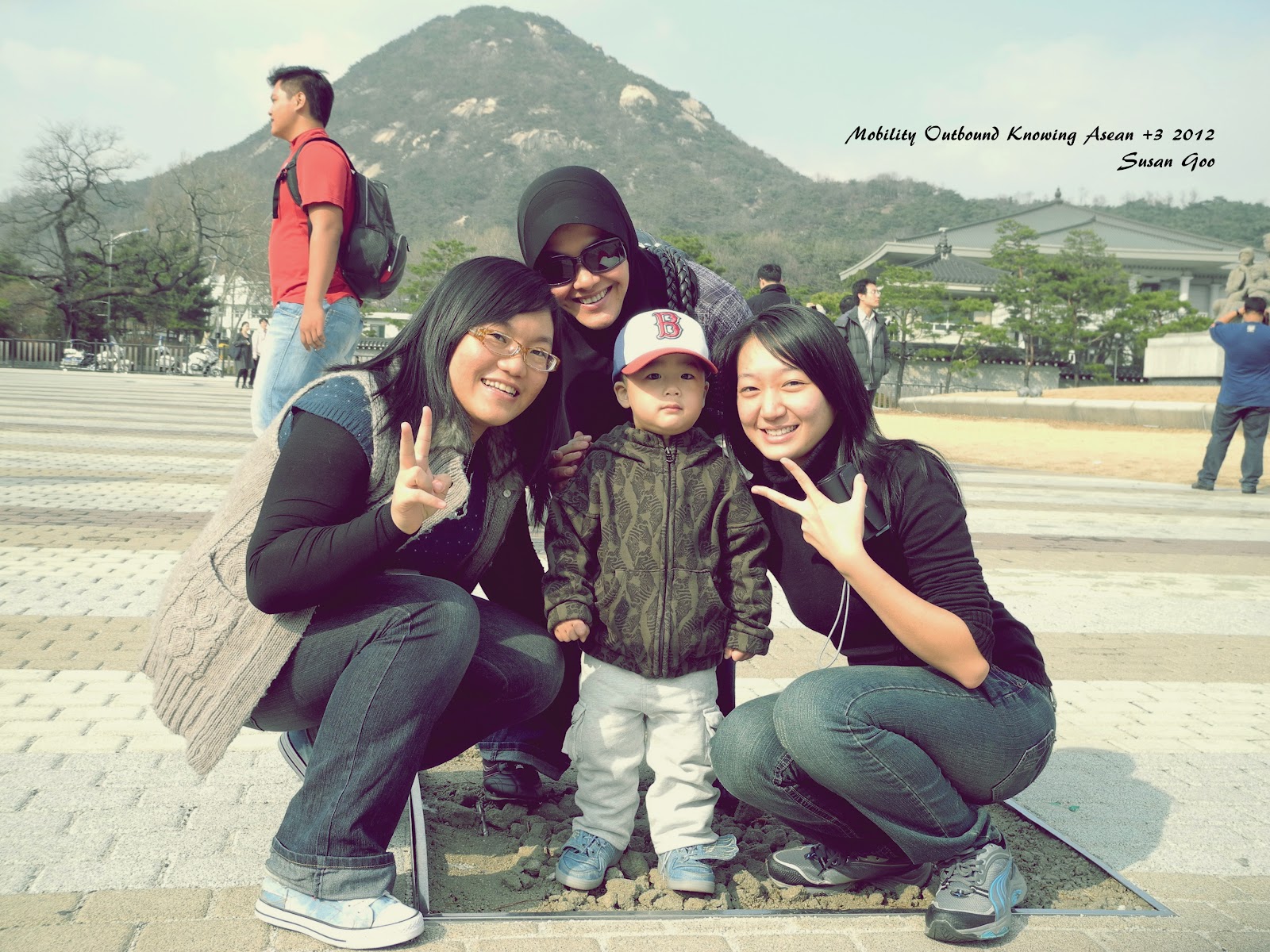
Photography with Korean Little Boy


Hmmm.. actually there is nothing much beside the nice view and some information about Korea, so we just drop by to take a look for awhile and took photos then held back to bus for the next destination. =)

Day 4: Kimchi Factory


After end of conference and briefing of the Seoul International Mosque, we headed towards the Kimchi Factory.


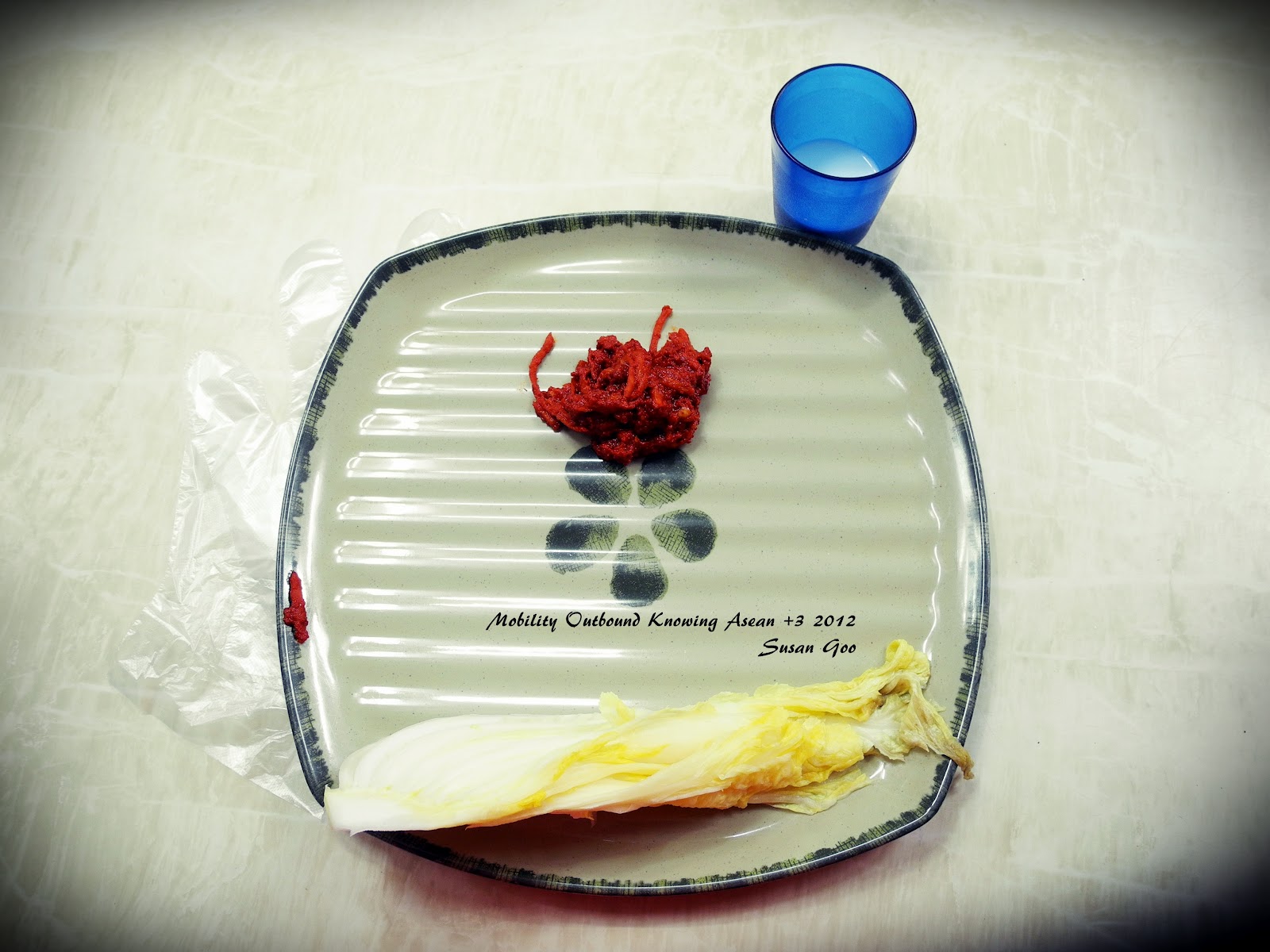
As everyone knows, Kimchi is a traditional Korean food. It is one kind of salted vegetables as a result of the fermentation process vegetables with salt, and other ingredients such as dried shrimp powder, garlic, ginger and red chili. Vegetables commonly used to make Kimchi is cabbage and carrots, as in the image below.


According to our tour guide, Philip, during the making process of Kimchi, some Korean will put some Ginseng powder because it can add flavor to the Kimchi and good for health. Usually, the rich people in Korea will be able to do so because ginseng powder are expensive.

In Korea, Kimchi is always served at mealtimes and so are almost all our meals are served with Kimchi in Korea.

Learning Lesson

Dr Rohayu and me
Photography Session

Even the moments was so rushing and not enough time but all of us at least know how to make it. =)

Day 4: Seoul International Mosque


Seoul International Mosque is also the headquarters of the Korea Muslim Federation (KMF) which, in the mosque not only serves as a place of prayer but also have an office, classroom, conference room, and lodging for the needy. 

A visit to the mosque is not only just to see the majestic beauty of this mosque, but for us to learn about the history and development of Islam in Korea.

A brief was arranged by the administration of the mosque to provide information about the history of Islamic society in Korea and Islamic cultures in the country.

Main View of Mosque

View from Mosque

Talk by Person-In-Charge of Mosque in Conference room


Photography Session

There is a funniest memories for me over here and totally unforgettable. Beside that, the person-in-charge of Seoul International Mosque are warmly and friendly. If there a tourist who are non-muslim came for visited, they will gave them some gift to appreciate them for visiting the mosque. =)